






You Might Be Missing Something
Implement a proven revenue generation system from a B2B marketing agency that thinks differently. Stop your hit-or-miss marketing, generate more leads and grow your company.
LET’S TALKThe Power of One
Three companies, decades of expertise, thousands of clients – now together in a single powerful solution.


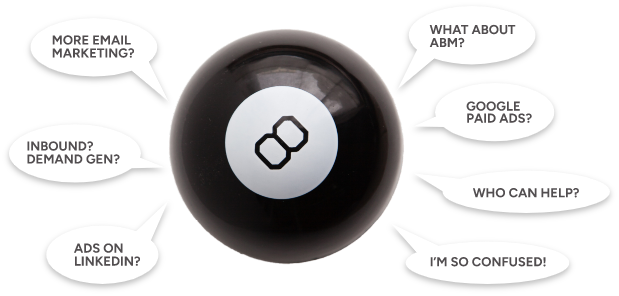
There’s Nothing Random About It
Achieve the growth you’re searching for with RGS™, an easy-to-use system to get consistent results and scale your business. We help B2B companies clarify sales and marketing goals, gain traction and increase revenue through simple, proven and practical tools.
SEE IF YOUR BUSINESS IS HEALTHY →
SEE IF YOUR BUSINESS IS HEALTHY →

- Strategy
- Tactics
- Campaigns
- Technology
Revenue Generation System (RGS)
Most B2B agencies do one thing well when what you need is a system that integrates expertise from across disciplines. RGS synchronizes your efforts to hit your unique goals.


We Think Different
Go beyond the status quo. Our innovative approaches deliver faster, lasting results for clients.

1. Strategy
Create a more emotional, compelling and differentiated story for your business that attracts more prospects and helps you close more new customers.

2. Tactics
Identify the right marketing tactics required to hit your revenue goals and deploy them in an orchestrated manner across multiple channels.

3. Campaigns
Take your new story and design personalized campaigns that leverage multiple tactics to produce leads and sales opportunities.

4. Technology
Apply HubSpot and supporting technology tools to automate, accelerate and analyze each of your revenue generation activities.
Performance. Certified.

















Better Together
RGS is designed for maximum impact and seamless integration with B2B organizations that leverage HubSpot and run business operating systems such as EOS®.
Execute With Expert-Led B2B Marketing Services
There is no one-size-fits-all program. Make RGS yours with a customized engagement that leverages a full range of B2B marketing services to hit your unique goals.


.svg)

Built on Experience, Driven by Expertise
RGS is the culmination of decades of specialized knowledge, sharpened skill and hard-earned insights from a seasoned team of experts.

Years in Business

Average Tenure in Years With Square 2

Average Team Member Age

Industry Certifications

Total Years of Experience

Leads Generated for Our Clients
Remarkable or Nothing
That’s the bar we set for everything we do – and the work speaks for itself.


All Systems Go
There’s a Lot to Love
The right system results in a better agency experience. See for yourself why these clients love working together.
 CROSBY HOPS
CHANDLER ASSET MANAGEMENT
SAFEBUILT
THIEL & TEAM
CROSBY HOPS
CHANDLER ASSET MANAGEMENT
SAFEBUILT
THIEL & TEAM
All the Content You Need in a Single Resource for Business
Access videos, livecasts, podcasts and educational content for CEOs, COOs, CMOs, CROs and sales leaders who want their companies to grow fast.
Recommended
B2B Messaging Series
A 4-Video Series That Explores How Businesses Can Turn Messaging Into an Advantage
Connected Customer Framework
Use This Workbook To Build a Connected, Orchestrated and Omnichannel Marketing Campaign
Featured
What’s Wrong With Revenue? – Season 3
In this series, we’re showing company leaders how a revenue generation system helps them generate more leads, create more new sales opportunities and close more new business. A guest joins Square 2 CEO Mike Lieberman in each episode to share tips for producing repeatable, scalable and predictable revenue growth.
Most Popular
